Image
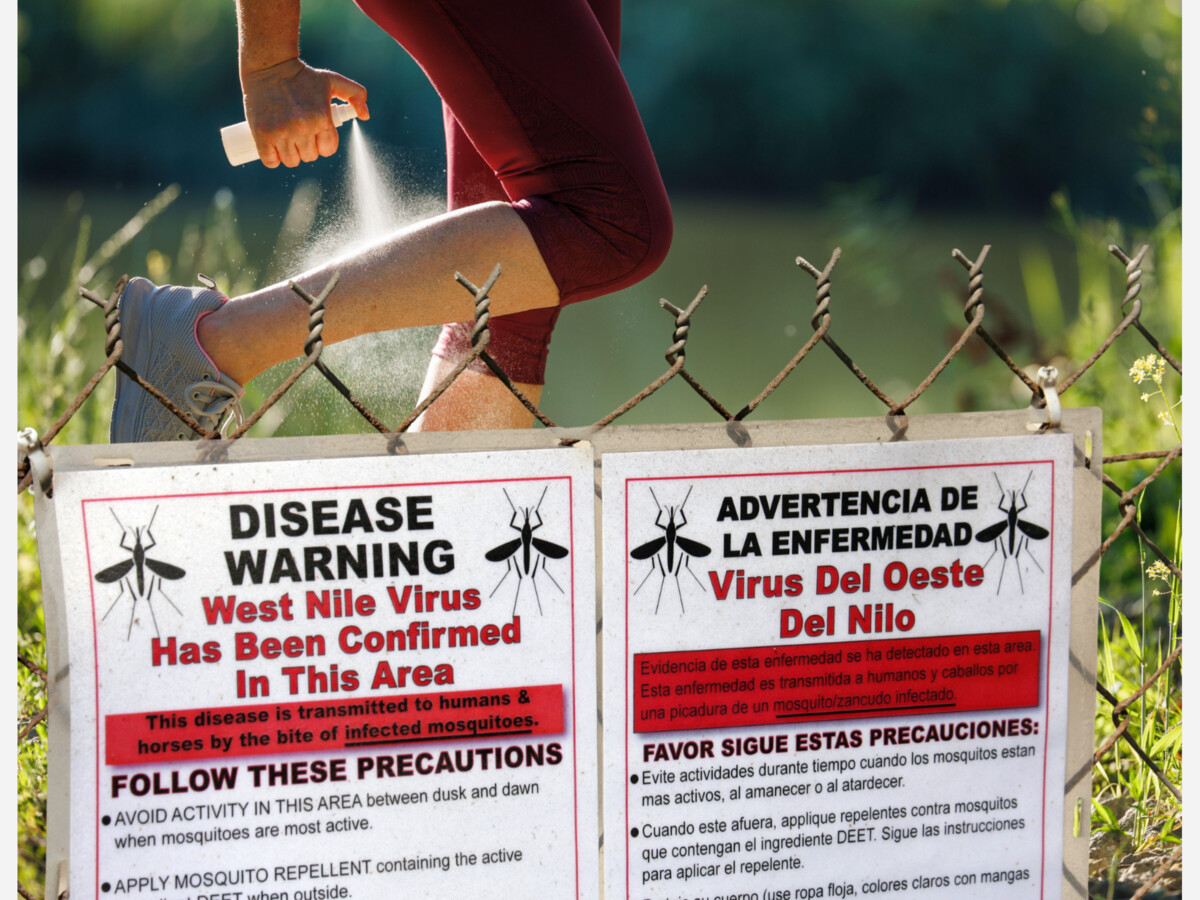



The Town of Westwood Board of Health (BOH) has announced that the town's alert level for West Nile Virus (WNV) has changed from low to moderate, following notice from state public health officials on Tuesday, August 4, that WNV-positive mosquitos have been found in Westwood.
"Our alert level for West Nile Virus has changed to MODERATE," states the August 4 announcement from BOH.
A state database titled "Positive WNV Samples for 2026" shows that one WNV mosquito sample collected in Westwood on July 28 tested positive for WNV. The state still has the WNV risk level for Westwood categorized as "low." The database notes August 4, 2026 as the date of its last update.
The state's data also show that one day after the WNV-positive sample was collected in Westwood, a positive a sample from neighboring Dover on July 29 tested positive for WNV.
Positive WNV samples were also found in the neighboring town of Dedham on June 24 and in nearby Brookline on July 15.
"With a risk level of MODERATE, the Health Department recommends residents take extra precautions to protect themselves from mosquito bites," reads the BOH announcement. Those extra precautions are to:
Additionally, BOH says residents can request truck-mounted spraying by Norfolk County Mosquito Control of their properties by calling (781) 762-3681 or visiting www.norfolkcountyosquito.org.
Recently, residents have expressed concerns about the impact of mosquito spraying on pollinators, other insects, and the birds that feed on them. In response, "mosquito dunks," a type of larvicide placed in standing water where mosquitoes lay their eggs, have been suggested as an alternative. They may contain Bti, a bacterium that kills mosquito larvae.
However, "Bti does not control biting female mosquitoes," according to the U.S. Centers for Disease Control and Prevention, indicating that the larvicide treatment should not be expected to kill adult mosquitoes.
The state's "Eastern Equine Encephalitis (EEE) Risk Map and Reporting" data show that risk level for EEE is "low," throughout the Commonwealth, as of August 4.
Residents who would like to report standing water or ask general questions about mosquitoes in the area are invited to call BOH at 781-320-1026.
Updated 8/5/2026 at 6:43 a.m.



Sunny, with a high of 61 and low of 36 degrees. Partly Cloudy in the morning, sunny in the afternoon, clear for the evening,