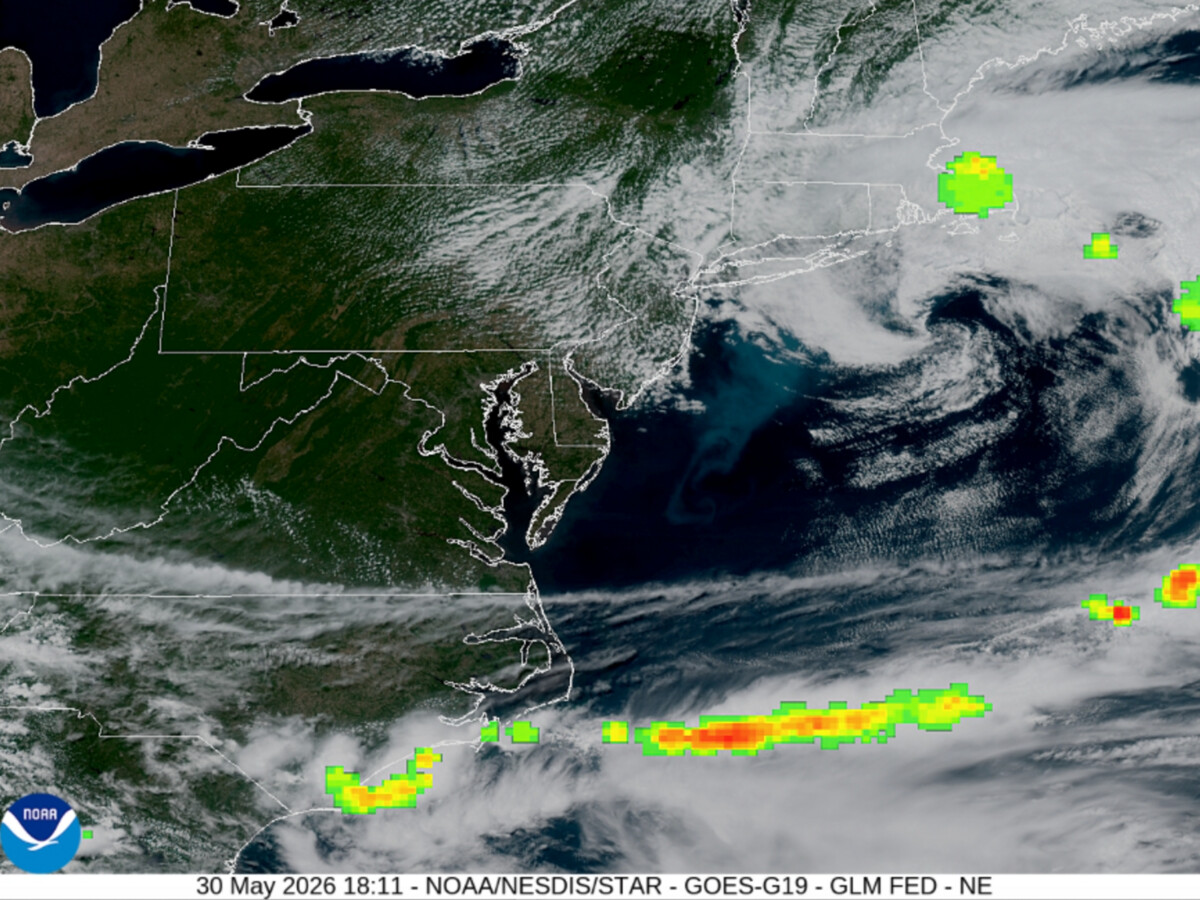
Around 2 p.m. on Saturday, May 30, local residents may have heard one or more loud booms, which some believed to be a fallen tree, car trouble, an explosion, or an airplane, but which NASA has explained as a sound from a meteor breaking up over Massachusetts and New Hampshire, releasing the energy equivalent of about 300 tons of TNT.
Around 4:00 p.m., Massachusetts Executive Office of Public Safety and Security announced via X.com that it had “received reports of an audible boom and ground tremors in Eastern Massachusetts,” but that it did not know the cause. It noted, however, that it was unaware of any requests for an emergency response due to the incident and did not believe there was any public safety threat.
The USGS Earthquake Hazards Program, which collects data using seismic sensors, opened an event page after receiving “Did You Feel It?” reports from people who experienced light to moderate shaking. USGS later described the event as a “widely felt sonic boom from a suspected bolide,” rather than an earthquake.
The National Oceanic and Atmospheric Administration (NOAA) explains a bolide as a large meteor that explodes in the atmosphere, which can create multiple booms. A similarly described event took place in Pennsylvania on January 1, 2022. Data showed the energy related to the Pennsylvania event was similar to 30 tons of TNT, said NOAA.
In the hours following Saturday afternoon's loud boom, local meteorologists pointed to an unusual flash recorded by NOAA’s GOES-19 weather satellite that occurred around the time of the boom, and which they said was distinguishable from lightning. Meteorologist Dave Epstein assessed the event as occurring over Cape Cod Bay. Others called the event a meteor or fireball or bolide.
Shortly before 8:00 p.m., NASA Space Alerts on X.com summarized the incident: “Eyewitnesses in New England and @NOAA’s GOES-19 satellite reported a bright fireball on Saturday, May 30, at 2:06 p.m. EDT accompanied by a loud noise. The meteor appears to have fragmented at an altitude of 40 miles over northeast MA and southeast NH. The energy released at breakup is estimated to be equivalent to about 300 tons of TNT, which accounts for the loud noise.”
Editor’s note: This article was written by a human. AI assistance was used to help locate the NOAA satellite image that serves as lead photo for the article - a static image of the light event, timestamped at 18:11 UTC, or 2:11 p.m. EST. Similar NOAA GOES-19 GLM imagery has been included by Boston.com, NBC10 Boston, and Fox Weather in their reporting of this event. The timestamp of the image included by Westwood Minute likely differs slightly from time of the event reported by both NOAA and NASA because the NOAA imagery is displayed in 5 minute intervals.
Updated May 31, 2026 at 8:52 a.m.
You may also be interested in:

 61° and Overcast