47° and Overcast
Image
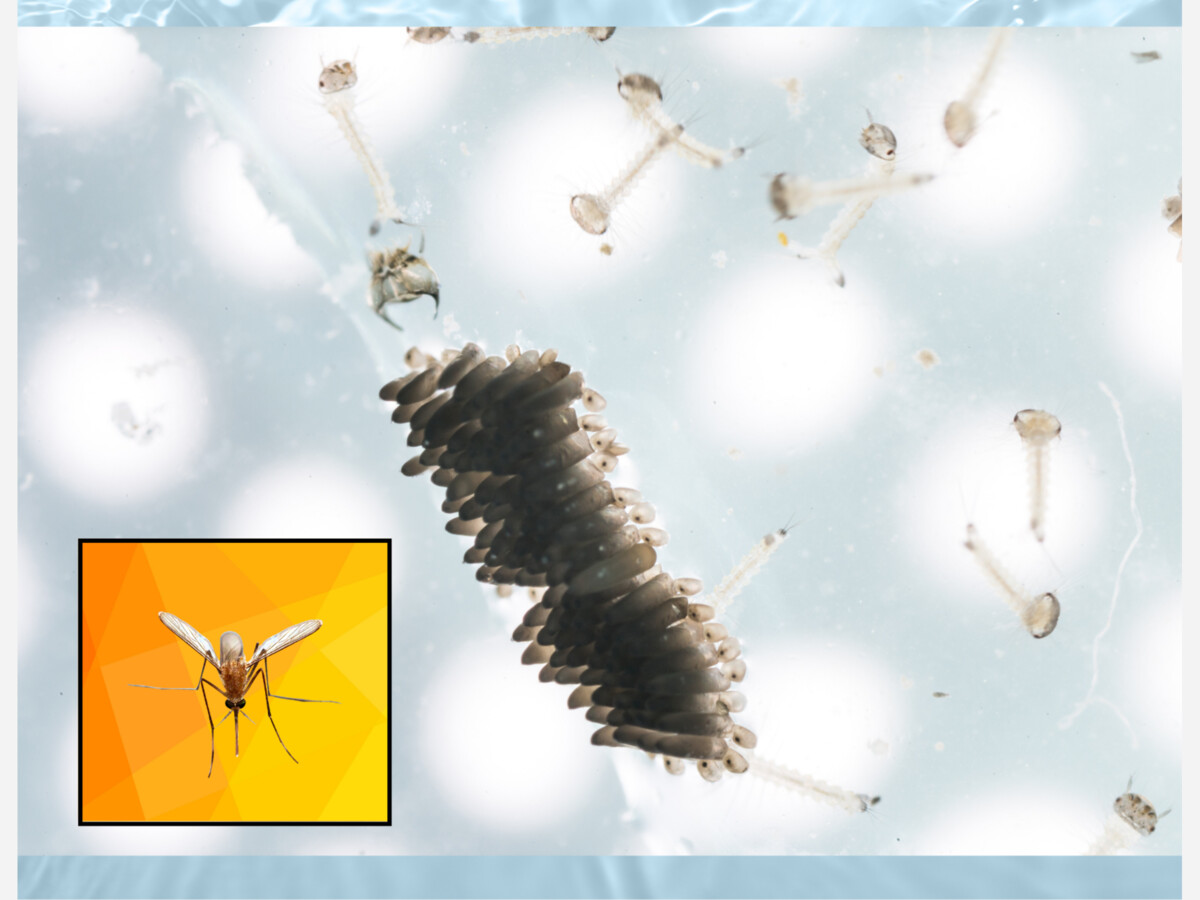
Image via Canva. Pictured are mosquito larvae in water, with an inset photo of an adult mosquito.



On Thursday, August 20, the Massachusetts Department of Public Health (DPH) announced the state’s first human case of West Nile virus (WNV) this year and is urging residents to take necessary precautions to avoid mosquito bites. The announcement comes one day after DPH reported that Eastern equine encephalitis (EEE) virus had been detected in mosquitoes in Massachusetts for the first time this year.
WNV and EEE are generally spread to people through the bite of an infected mosquito. While some people infected with WNV or EEE may experience no symptoms, others can develop serious and potentially fatal illnesses.
“The mosquitoes will be with us until the first hard frost,” said State Epidemiologist Dr. Catherine M. Brown. “People should use mosquito repellent with an EPA-registered active ingredient, clothing to reduce exposed skin, and consider rescheduling outdoor activities that occur during the evening or early morning when mosquitoes are most active.”
The first human case of WNV in Massachusetts this year involves a man in his 90s who was exposed in Middlesex County.
Due to this finding, along with 180 WNV-positive samples detected in 13 counties, DPH has elevated WNV risk levels to moderate in 70 communities, including Westwood and surrounding communities.
According to DPH’s website, a moderate risk level means that infection with WNV is likely or has already occurred in the designated area. Norfolk County communities that have a moderate risk level as of the publication of this article are Avon, Bellingham, Brookline, Canton, Cohasset, Dedham, Dover, Franklin, Holbrook, Medfield, Needham, Norfolk, Norwood, Sharon, Stoughton, Walpole, Wellesley, Westwood, and Wrentham.
“West Nile virus can be a devastating disease, especially for those who are older or have compromised immune systems. This first case in Massachusetts should remind people across the state that risk remains high,” said Public Health Commissioner Robbie Goldstein, MD, PhD.
West Nile virus (WNV) was detected in Westwood, Dover, and Dedham in late July this year. Positive WNV samples were also found in the neighboring town of Dedham on June 24 and in nearby Brookline on July 15.
“The end of August is frequently a time for people to enjoy being outside before the start of the school year and the arrival of fall, but I want to remind everyone of the importance of taking steps to prevent mosquito bites,” said Dr. Goldstein. “While most people exposed to WNV will not develop serious illness, some may develop very severe illness requiring hospitalization. In some cases, the disease can be fatal,” he said.
On August 19, DPH announced the presence of EEE in Massachusetts in mosquito samples collected on August 17 in the town of Kingston in Plymouth County. The finding has resulted in DPH elevating the risk level of EEE to moderate in the communities of Carver, Halifax, Kingston, and Plympton.
“EEE activity in Massachusetts tends to occur in outbreak cycles,” said State Epidemiologist Dr. Catherine M. Brown. “When EEE is found in mosquitoes later in the season like this, there is less opportunity for the risk to increase to very high levels. But anytime EEE virus is in mosquitoes, it can be spread to people.”
As of August 20, according to the health department's database and map of EEE risk levels, the risk of EEE remains low in Westwood and all areas of Massachusetts except for the four named communities.
There were 12 human cases of EEE in Massachusetts in 2019 resulting in six deaths. In 2020, there were five human cases and one death. In 2024, there were four human cases and one death. DPH notes that there were no human cases of EEE in Massachusetts in 2021, 2022, 2023, or 2025.
State officials say residents have an important role to play in protecting themselves and their loved ones. Residents can take the following actions to avoid mosquito bites:
More information, including all WNV and EEE-positive results, can be found on the Arbovirus Surveillance Information web page, which is updated daily, or by calling the DPH Division of Epidemiology at 617-983-6800.
"The Department of Public Health recommends that people use mosquito repellent when they are spending time outdoors so they can enjoy the rest of the summer and decrease their risk of being bitten," Dr. Goldstein said.

Overcast, with a high of 61 and low of 46 degrees. Overcast during the morning, clear in the afternoon and evening, overcast overnight.