Photo by Westwood Minute/Darlene Wong Cancell. The corpse flower plant, called "Eliza," bloomed for the first time in ten years. Eliza's bloom was on display at The Garden at Elm Bank in Wellesley, from Sunday, July 27th to Monday, July 28th.
Visitors have had a chance to view a rarity. The once-in-a-decade, short-lived corpse flower (Titan Arum) bloom is one of the world's largest, lasts only about 24 hours, and it was on display at The Garden at Elm Bank in Wellesley, Massachusetts, from Sunday, July 27th to Monday, July 28th, after which the large flower structure is expected to wither and topple over.
Photo by Westwood Minute/Darlene Wong Cancell. The corpse flower is actually an inflorescence, or cluster of hundreds of flowers, contained within a structure that appears as a single flower.
Elm Bank's "Eliza," as tall as a person and worthy of being so named, measured about 5'5" from base to tip, according to one knowledgable Elm Bank employee's guesstimate. Eliza began blooming around 5:15 p.m. on Sunday, during which time the smell of decaying flesh could be detected from more than one hundred yards away, according to another Elm Bank employee.
The corpse flower is actually an inflorescence, or a cluster of hundreds of male and female flowers attached to a single stalk. Eliza's small flowers are enclosed in a structure that takes the appearance of a single, large flower.
Photo by Westwood Minute/Darlene Wong Cancell. A portion of the large floral structure of the corpse flower is cut away, displaying the cluster of hundreds of female flowers inside. Hidden from view inside the green structure and above the female flowers are the male flowers.
The Titan Arum emits the foul stench by generating its own heat, in order to attract carrion beetles to pollinate it. The smell, commonly described as rotting flesh, lasts for about 24 hours, during which the carrion beetles bring pollen to the ripe female flowers. When the smell dissipates, the beetles leave with pollen from the plant's male flowers, to spread elsewhere. In the case of Eliza, which bloomed in a small, glass-windowed greenhouse at Elm Bank, pollination was achieved by humans using a paintbrush and pollen shipped overnight from a Chicago seed bank.
Photo of thermal image by Westwood Minute/Darlene Wong Cancell. The Garden at Elm Bank displayed this thermal image of the blooming Eliza, taken on Sunday, July 27th, that shows the heat Eliza generated to emit the smell of rotting flesh to attract its pollinators. The hottest part, indicated by the white area, is around 90 degrees.
Two years ago, Eliza had attempted what caregivers hoped would turn into a bloom, but the growth failed to open. Instead, it collapsed, and died. This time, the end of July 2025 marked success after a decade of horticulturalists' care, as Eliza finally responded with its first bloom.
This timetable is not unique to Eliza. The Titan Arum's first bloom may take ten years to come to fruition, as it works to store energy for one of the largest blooms on earth. However, once it makes its first bloom, successive blooms may happen every five years to seven years, if one is lucky. The corpse flower's native habitat is the rainforest of Sumatra, Indonesia, so growing a corpse flower in New England is tricky. Although Eliza was on display at Elm Bank, it was staff at Wheaton College that provided the long-term care for Eliza, ensuring that the plant's needs were met.
Photo by Westwood Minute/Darlene Wong Cancell. Some of Eliza the corpse flower's last visitors line up on Monday evening, July 28, 2025, hoping to view one of the world's largest flowers in bloom in a small greenhouse, before it collapses in a few hours.
After Eliza collapses, its seeds will be collected, and given to other interested parties, including Wheaton College. Eliza's pollen has already been collected for future use and study.

 56° and Sunny



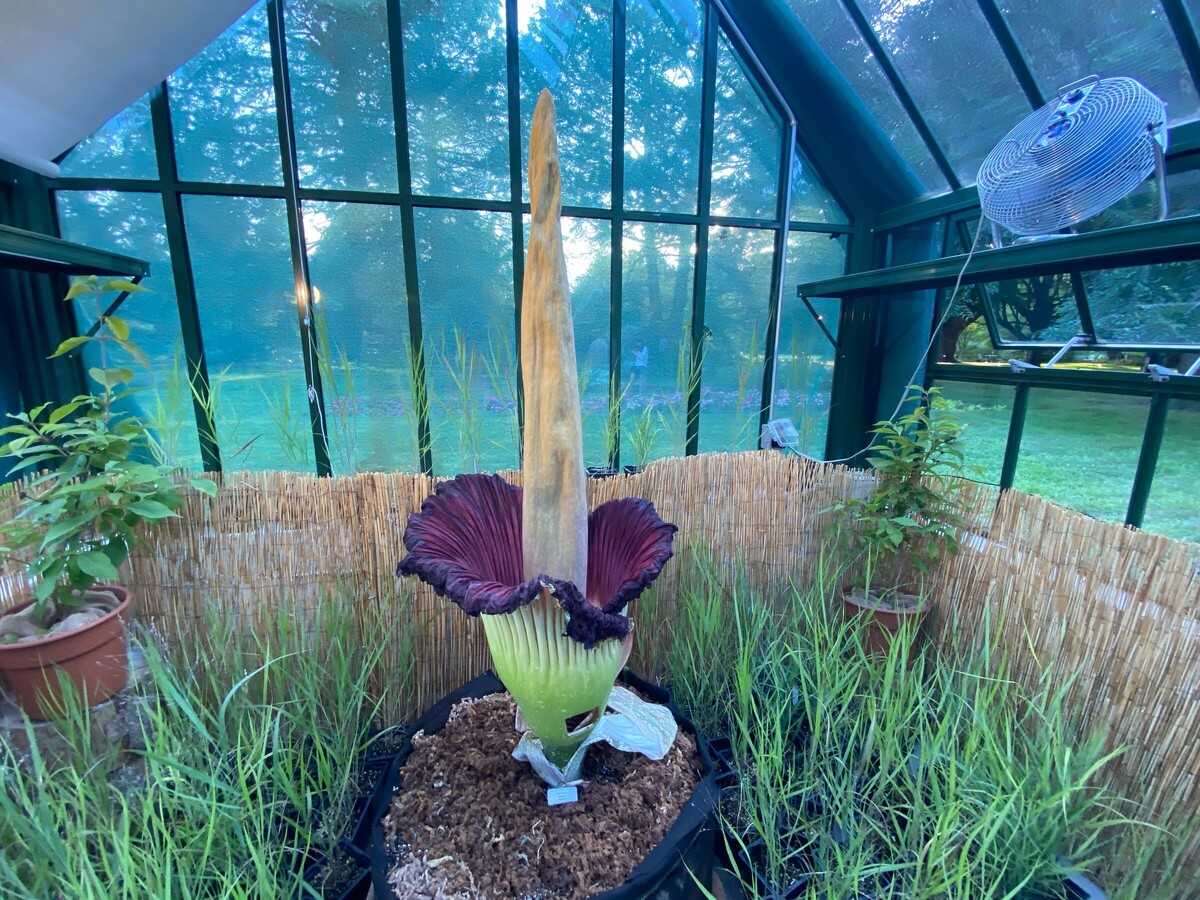
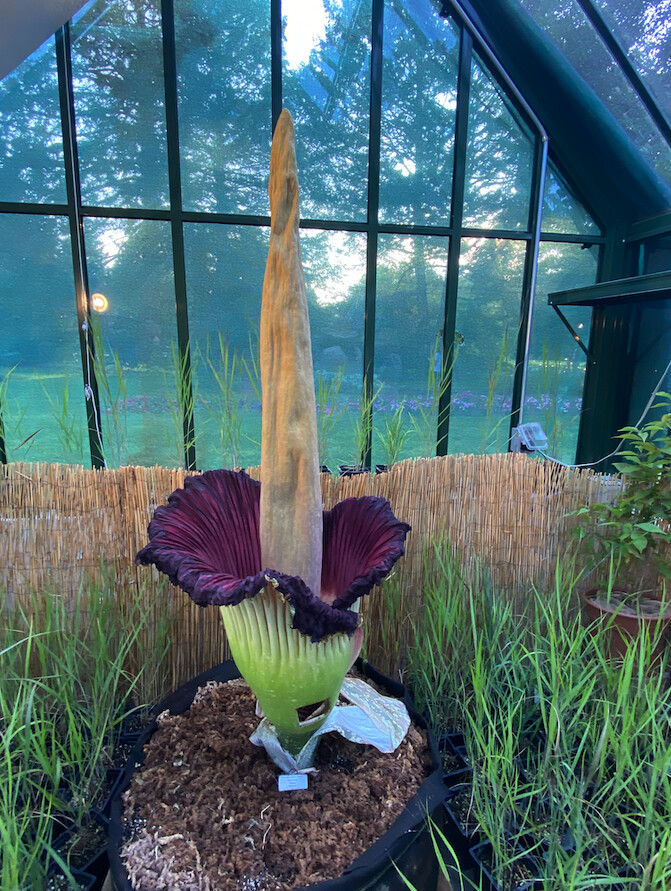 Photo by Westwood Minute/Darlene Wong Cancell. The corpse flower is actually an inflorescence, or cluster of hundreds of flowers, contained within a structure that appears as a single flower.
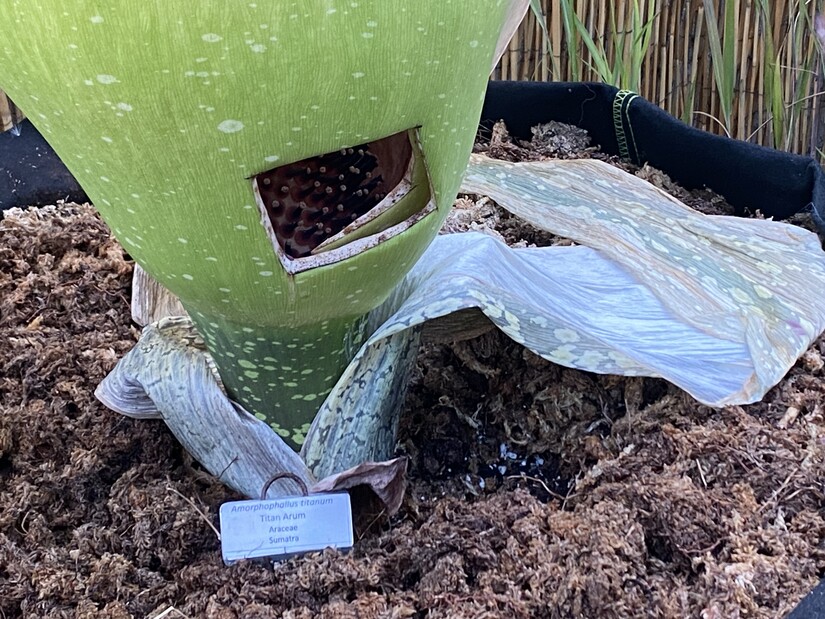 Photo by Westwood Minute/Darlene Wong Cancell. A portion of the large floral structure of the corpse flower is cut away, displaying the cluster of hundreds of female flowers inside. Hidden from view inside the green structure and above the female flowers are the male flowers.
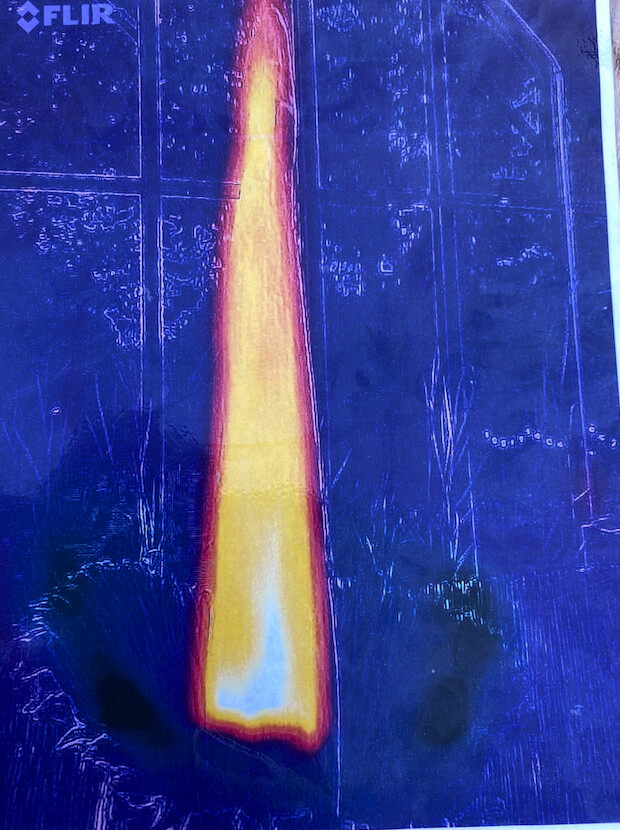 Photo of thermal image by Westwood Minute/Darlene Wong Cancell. The Garden at Elm Bank displayed this thermal image of the blooming Eliza, taken on Sunday, July 27th, that shows the heat Eliza generated to emit the smell of rotting flesh to attract its pollinators. The hottest part, indicated by the white area, is around 90 degrees.
  Photo by Westwood Minute/Darlene Wong Cancell. Some of Eliza the corpse flower's last visitors line up on Monday evening, July 28, 2025, hoping to view one of the world's largest flowers in bloom in a small greenhouse, before it collapses in a few hours.