Image
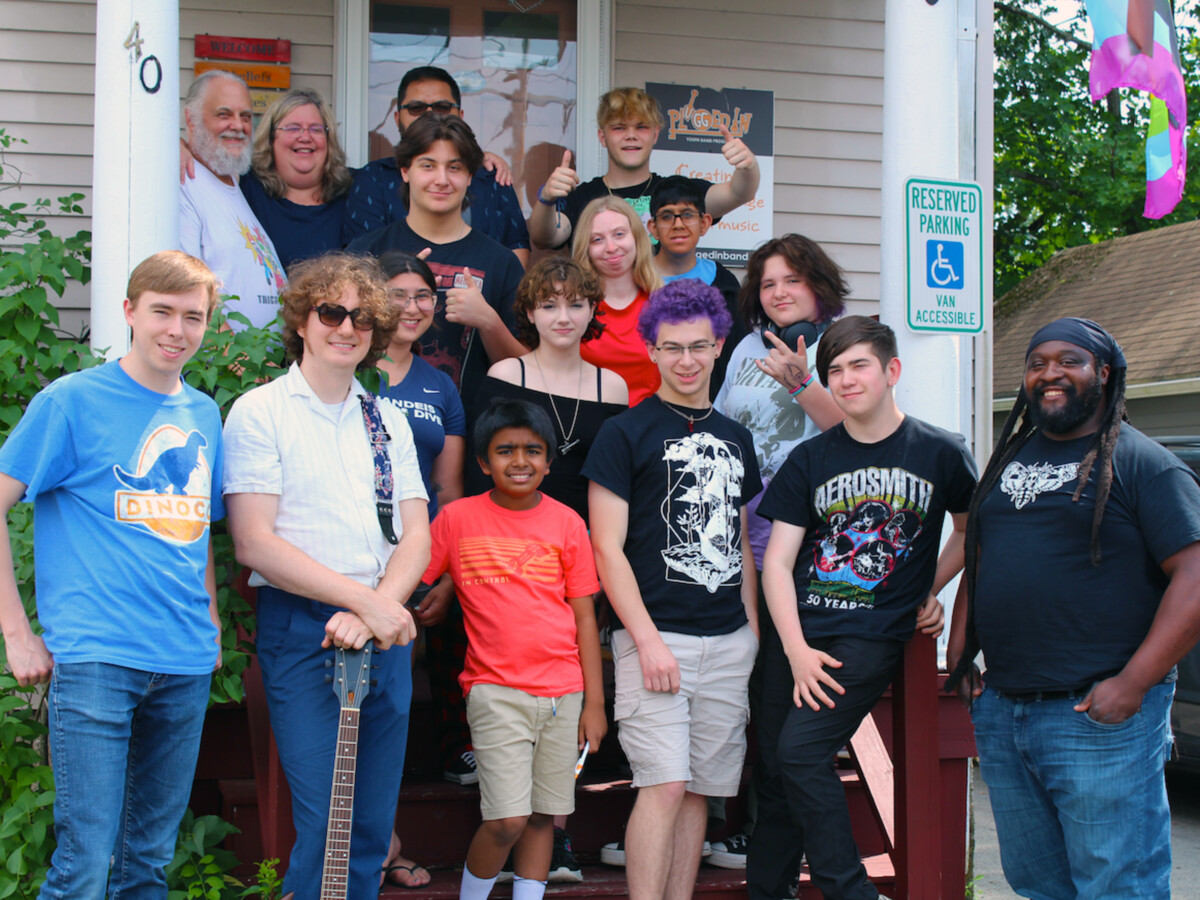
Photo courtesy of Plugged In. Pictured are staff and participants of a Plugged In camp.



By Maddie Mulligan
Sitting on a Provincetown beach with her husband and friends, Sandra Rizkallah was enjoying the sea breeze when she was suddenly struck with an idea.
Feeling as though someone tapped her on the shoulder and whispered to her, “You should do this,” Rizkallah shot to her feet and pitched the concept to her husband: an inclusive band program for people of all skill levels and abilities.
From there, Plugged In was formed. Spreading the word through tear-away flyers at a time before social media was popular, Rizkallah and her husband, Tom Pugh, formed a small curriculum and ran with it.
Coming from a family of educators, Pugh’s natural spirit for teaching combined easily with Rizkallah’s personal mission of sharing compassion and inclusion with others to shape Plugged In.
Valuing inclusion and openness above all, Plugged In fosters a noncompetitive, non-hierarchal environment for all to thrive in. While some students can thrive in the competition of traditional schooling, there are many who struggle with that model of education.
Plugged In provides an outlet of teaching that appreciates each student’s contributions equally, allowing students to grow musically and personally in a way that avoids the anxieties of traditional schooling.
“Those who struggle in traditional school systems really find a place in Plugged In where I feel like they can really be themselves, they can learn in the way they learn,” said Rizkallah.
With growing expectations for what success is for teenagers—going to the best college, doing many extracurriculars, getting top grades—kids can lose track of who they really are and what they really want in life, Rizkallah said.
By providing an outlet away from school where kids can simply explore an interest, Plugged In can teach its students about themselves as well as music.
“When a person can kind of be themselves, be in an environment where they can feel comfortable being themselves and also access compassion in themselves, then suddenly they're very connected to who they really are,” said Rizkallah
Plugged In focuses on educating its students about skills such as compassion, empathy, and inclusivity that they can take into their future lives. At Plugged In, everyone is treated the same. The program offers a community to anyone seeking a creative outlet to belong in—regardless of background.
Francis Hickey, Plugged In’s Inclusivity Coordinator, works with students, parents, and teachers to figure out the best support for students with disabilities. Plugged In manages an Inclusivity Fund to provide scholarships as well, getting rid of financial restrictions that could prevent people from joining.
This importance placed on inclusivity goes beyond the acceptance of students. When it comes to making the bands, the Plugged In team does not take skill level and ability into account, allowing for students to learn in an environment without pressure.
“We just take everybody as they are, as musicians and people, and put them together based on who we think would be a great fit more socially than anything else,” said Matthew Cunningham, Plugged In’s Program Director.
On top of instilling in its students the value of open-mindedness and a sense of community, Plugged In also focuses on philanthropy. Plugged In wants its students to understand not just what it is like to be in a welcoming community, but how important it is to then give back to that community.
Every session ends with a community charity concert where students choose what organization they would like the proceeds to go to. The next concert will be featured in a three day musical event from January 9th to January 11th at the end of the fall session, which begins September 17th.
Through this, Plugged In provides a sense of civic engagement that it hopes its alumni can use going forward. And, many times, the alumni do, said Rizkallah.
“They see Plugged In, they cherish it, and see it as a community that they want to nurture and continue because of what they benefited from it,” said Rizkallah.
To further target its efforts toward civic engagement, Plugged In began a program called Peace Tracks in 2021. The virtual exchange program groups students in the U.S. with refugee and non-refugee youth in Europe and the Middle East, forming bands that then create an original song about a particular issue.
Through Peace Tracks, Plugged In hopes to use music in order to help bridge the divide between immigrant and non-immigrant populations around the world. Music has often been a method to instill change, and Plugged In shows those with music skills how to use them for good, said Cunningham.
“I think music is just such a powerful form of expression and art that can really bring people together, and I think that that's hugely important. A lot of our students are seeing the value of that and experiencing what it's like to be brought together by music right now,” said Cunningham.
Thanks to Maddie Mulligan, student at Boston College, and head editor for the arts section of The Heights, an independent, student-run newspaper, for contributing this article to Westwood Minute. Ms. Mulligan is interning with Westwood Minute for the summer.



Sunny, with a high of 57 and low of 35 degrees. Sunny during the morning, clear during the afternoon and evening,