59° and Cloudy
Image
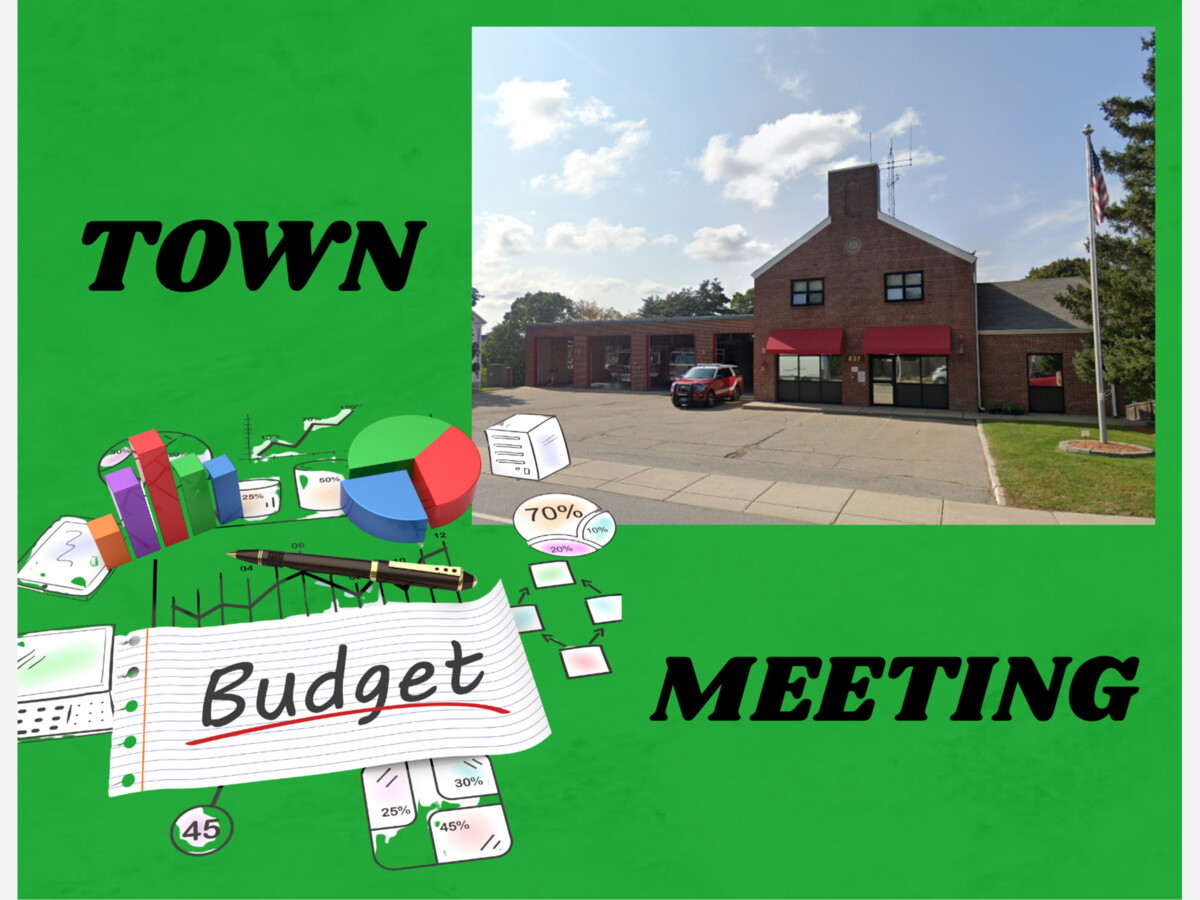



A majority of voters have approved a balanced budget for Fiscal Year 2027 for the Town of Westwood and have voted to move forward with investigating three potential sites for a new Fire Station 1 by funding a feasibility study, following Westwood’s Annual Town Meeting held in the Westwood High School auditorium on Monday evening, May 4.
Voters approved an operating budget of $125.5 million for FY 27, representing a 4.3 percent increase over the previous budget, with an estimated impact to residential tax bills (based on a home valued at $1,250,705) of a 3 percent increase.
Notably, according to the town’s supporting documentation, the 3 percent property tax increase approved by voters is the lowest percentage increase in the last five years. It is also among the three lowest year-to-year percentage increases over the past decade.
In a challenging year for that budget that Town Administrator Connor Read attributed in part due to rising costs of health insurance and increased costs related to special education, solid waste and recycling, and public safety, it appears that spending down the town’s available free cash as a funding source for various items in this budget may have contributed to moderating the impact to taxpayers.
The discussion preceding the budget’s approval was one of the longest discussions of any of the 31 articles under consideration - and it was a short discussion, with only a handful of commenters. A few residents raised the general concern that voting against the budget as presented in Article 3 does not seem feasible at Town Meeting, even if one disagrees with parts of it, as “[t]he cake is baked,” according to the perception of a few.
Upon a question of procedure, however, Moderator Jim O’Sullivan clarified that amendments can be proposed to articles (including the budget), so long as they are presented in writing, ahead of time. It is possible to come to Town Meeting and strike an item out of the budget, he confirmed.
The vote following the Article 3 discussion reflected residents’ overwhelming support of town officials’ proposed budget, with Yes votes numbering 199 and No votes numbering 34.
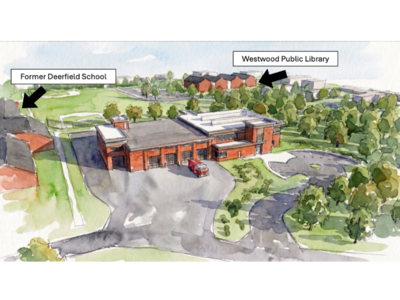
The longest discussion centered on Article 22, a request from Select Board that residents approve $325,000 to pay for feasibility and schematic design services for studying the siting of Fire Station 1 at three possible locations, including cost estimates, environmental review, traffic analysis, public outreach, and other related professional services. In presenting the article, which names the three locations of interest as the existing Fire Station 1 on High Street, the Deerfield Elementary School property on Deerfield Avenue, and the town-owned, landlocked parcel behind Starbucks at 736-738 High Street, Town Administrator Connor Read carefully noted that Article 22 does not represent selection of a final site, final design, construction funding, or tax increase.
To be funded by free cash, Article 22 was intended to be responsive to the community’s desire for greater participation and transparency in the decision-making related to building a new FS1, he noted.
Resident discussion against Article 22 included objections that the feasibility study is unnecessary. One resident raised the point that a previous feasibility study has already been performed for rebuilding on the existing site of Fire Station 1. A few others argued against Article 22 for the expenditure, noting that senior citizens are concerned about increased taxes and that capital spending in Westwood needs to be controlled. A few others advocated for the “open spaces” of the Deerfield School and the landlocked property sites, which they believed should be preserved and protected from development.
On the flip side, a proponent noted that firefighters “who go home with bloody noses from the mold” deserve “a shot.” To frame Article 22 as reasonable, he pointed out that voters had just approved giving School Committee $435,000 in litigation expenses for a “personnel blunder,” referencing voters’ approval of Article 15 (an appropriation from free cash for school litigation).
At one point in the lengthy discussion, a motion to move the question and stop public discussion was made. The resulting vote on the motion showed that the room was evenly split, with 167 residents voting to continue the discussion and 168 residents voting to move on. Because the vote fell short of the two-thirds required, the discussion continued.
In the end, voters approved Article 22, with Yes votes numbering 238 and No votes numbering 69.
Article 30, which amends the town's bylaws regarding short-term rentals, also generated some notable, though brief, discussion. In setting forth reasons recommending that voters approve Article 30, the Finance and Warrant Commission has noted that the bylaw amendment would require property owners of short-term rentals to reside on the property for at least nine months of the calendar year which is intended to help ensure that primary use of the property is as a residence.
Proponents explained with some emotion that living next to a home being used as an Airbnb rental has caused extreme stress and worry due to the constant turnover of unfamiliar occupants and concerns about safety and security. Opponents argued that the bylaw change is unnecessary and cumbersome to enforce for a small town like Westwood, and that more thought is needed before any decision is made. In electronic voting, voters approved the bylaw amendment.
The almost three-hour-long business portion of Monday's meeting was notable for the increased communication between town officials and residents compared to recent past town meetings. There was also a seemingly greater level of civility in the discussions. The meeting opened with instructions regarding procedures and voting, and individual articles were systematically introduced with brief descriptions of their contents. Each question raised by residents at this Town Meeting was addressed by a town official, rather than being left unanswered, which often happened in past years. Monday's meeting also served to introduce captioning in real-time, enhancing accessibility to the interested public. Audio translation to a preferred language in real-time was also available both to attendees in the room and those viewing the meeting remotely by scanning a QR code to enable the translation service.
Updated 5/5/2026 at 12:25 p.m.



Sunny, with a high of 75 and low of 59 degrees. Fog in the morning, overcast for the afternoon, clear in the evening, light rain shower overnight.






Thank you for this article! The simple rule of thumb for what is acceptable isONLY clean paper, cardboard, and empty bottles, cans, and rigid containers at least the size of a tennis ball.