This post expresses the views and opinions of the author(s) and not necessarily that of Westwood Minute management or staff.
By Karen Manor Metzold, Westwood Land Trust Board Member and Past President
In recent weeks, there has been a great deal of conversation, and some misinformation, about
the future of Clapboardtree Meadow. As someone who has served on the Westwood Land Trust
(WLT) Board for more than two decades, I want to share the facts, the principles, and the
promise that guide our work to protect this land and others like it.
The Westwood Land Trust is a local, volunteer-driven nonprofit that protects more than 220
acres across town. When you drive along Gay, Hartford, Summer, or Clapboardtree Street and
see open fields and historic estates protected from development, you are seeing conservation in
action. Those scenic landscapes are not accidental; they exist because of community members
who believed in keeping Westwood beautiful, healthy, and connected to its natural roots.
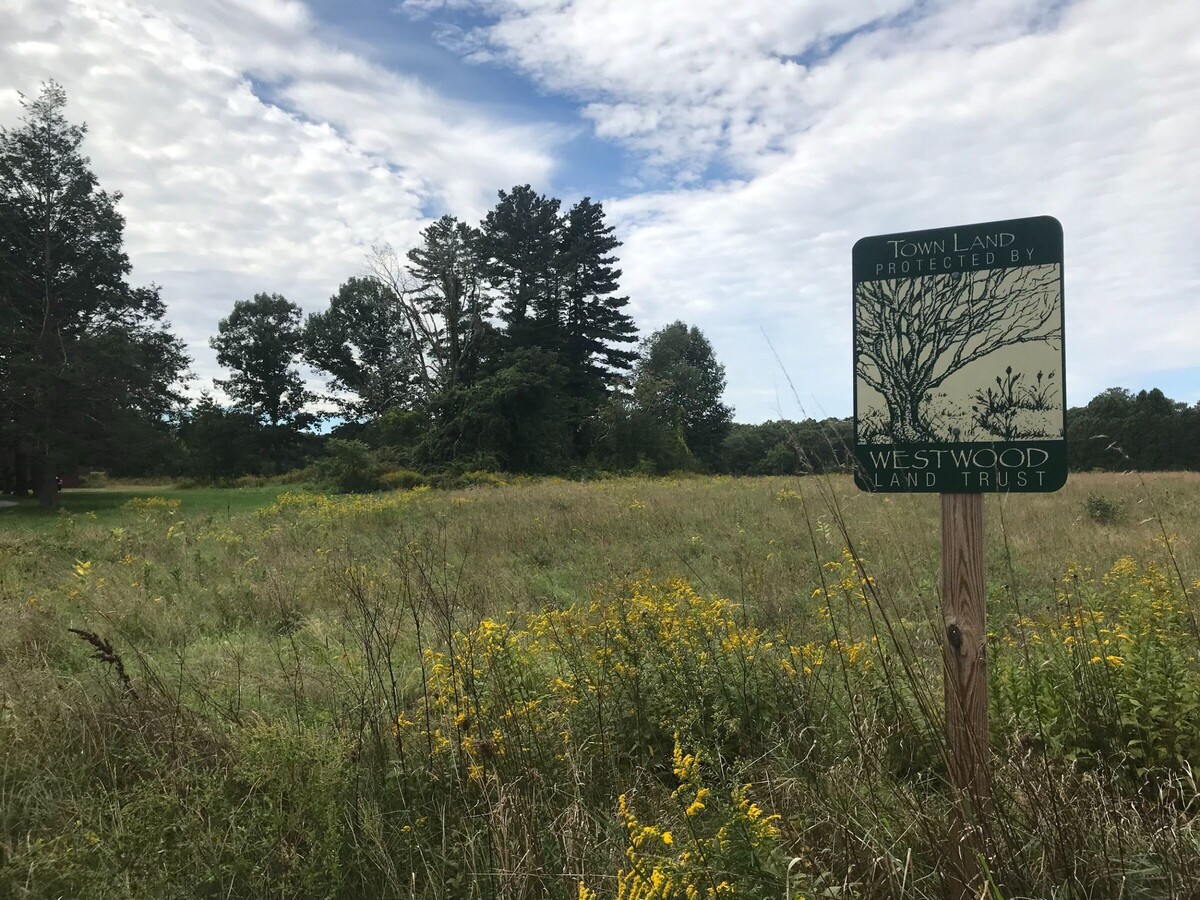
Clapboardtree Meadow is one of those rare and remarkable places. It is a mature, self-
sustaining meadow filled with wildflowers, birds, pollinators, and native grasses. Meadows like
this are disappearing across eastern Massachusetts, yet they play a vital role in protecting clean
water, stabilizing soil, filtering runoff, and sustaining biodiversity. This particular meadow helps
protect Plantingfield Brook and provides an invaluable haven for wildlife.
When Duncan and Ellen McFarland purchased the property years ago, they did so to prevent
development and to ensure the land would remain in its natural, open state. Through a
Conservation Restriction (CR), they permanently protected the meadow and entrusted the
Westwood Land Trust to enforce those protections. A CR is a legally binding obligation that
defines what can and cannot be done on a property, not just for today but for generations to
come. It is, quite literally, a promise to the future.
The CR for Clapboardtree Meadow is clear: The land is to remain in its natural condition. While
there is a process by which exceptions may be requested, those exceptions must not materially
impair the land’s conservation values. The Town sought such an exception for farming, and the
Land Trust reviewed it carefully with advice from wildlife and meadow specialists. The
conclusion was clear and unavoidable: plowing up a healthy meadow and replacing native
habitat with a farm would destroy the very qualities the CR was designed to preserve.
Conservation is not static. It requires vigilance, respect, and sometimes difficult choices. At
WLT, we review requests for exceptions carefully and seek expert input to ensure that no
change would compromise the ecological integrity of a property. That diligence is what makes
Westwood’s conservation legacy strong.
Our goal is simple: to uphold the commitments that others before us made to safeguard the
town’s natural beauty and ecological health. Preserving places like Clapboardtree Meadow is
not about stopping progress; it is about defining what we value and upholding these safeguards
for the land. Once open space is gone, it is gone forever.
Protecting this meadow honors the vision of those who acted to preserve it and keeps faith with
the generations who will call Westwood home long after us. Conservation is a commitment, and
it is one we intend to keep.

 52° and Moderate rain